
Blogs

Sharing knowledge is key to an innovative and healthy industry! This knowledge center is therefore a central place on our website to share information. Read all about our industry in the blogs below!

How to Choose the Best Injection Molding Products for Your Needs?

Choosing the right injection molding product can be challenging. With numerous options available, selecting the best one for your needs is essential. Both quality and performance matter significantly. It’s crucial to consider materials, designs, and production capabilities.

Experience plays a vital role in this choice. A thorough understanding of different injection molding products helps you make informed decisions. Evaluate the reputation of manufacturers. Look for expert reviews and customer feedback. Reliable sources provide insights that can guide your selection.

You may encounter difficulties during this process. Products might not always meet your expectations. Sometimes, specifications can be misleading. Reflecting on these aspects will lead to better decisions in the future. By focusing on quality and detailed understanding, you can find the perfect injection molding product.
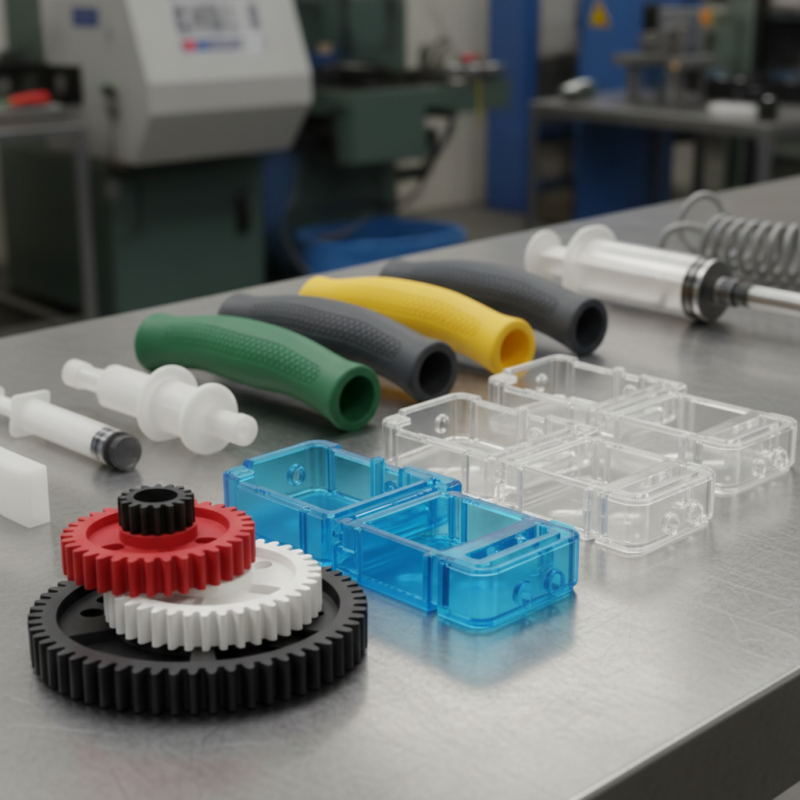
How to Choose the Best Injection Molding Products for Your Needs?

Understanding Injection Molding: Key Concepts and Techniques

Injection molding is a complex process involving various techniques. Understanding the basics can greatly enhance product quality. It’s crucial to know key concepts like material selection, design intricacies, and cost factors. Each element impacts the end product's functionality and durability.

Material choice is essential in injection molding. The type of resin affects strength, flexibility, and thermal resistance. For example, thermoplastics are popular for their ease of shaping. However, they may not suit every project. It’s important to evaluate specific needs against material properties.

Design elements also play a significant role. Features like wall thickness and draft angles can affect manufacturability. A well-designed part reduces waste and optimizes production time. But, it can be challenging to balance aesthetics and functionality. Designers often face tough choices. In the end, careful consideration of both materials and designs leads to better outcomes.

Identifying Your Specific Needs for Injection Molding Products

When selecting injection molding products, it's crucial to identify your specific needs. This process involves understanding the application requirements, production volume, and material specifications. Clear specifications can direct your choices effectively.

Tips: Consider the environment where the product will be used. Will it face extreme temperatures or chemicals? This knowledge will impact material selection. Evaluate potential production costs, as they can vary widely. Speak to experts if needed to gain insights into the nuances of various materials and processes.

Don't forget about scalability. Think about future projects and whether your chosen products can accommodate growth. Often, products that seem suitable now may not be adequate later. Remember that not everything is perfect; some designs may require iteration. Testing prototypes can unveil imperfections that require adjustments. Overall, thorough research is your ally in making informed choices.

Evaluating Material Options for Injection Molding Products

When evaluating material options for injection molding products, it’s essential to consider durability and application needs. Different materials, such as ABS, polycarbonate, and nylon, offer unique advantages. ABS is known for its strength and impact resistance, making it ideal for consumer products. Polycarbonate, on the other hand, provides excellent clarity and thermal resistance, which can be crucial for specific applications like lighting fixtures.

Beyond strength and clarity, cost is a key factor. Some materials can be quite expensive while others provide a balance of performance at a lower price. It’s important to conduct a cost-benefit analysis to ensure the chosen material aligns with project budgets. Additionally, environmental considerations are rising. Eco-friendly materials are becoming available, but they may require additional testing for performance.

Another aspect to reflect on is the processing characteristics of different materials. Some might be easier to mold but could come with limitations in strength. Others might enhance design flexibility but demand specific techniques. Balancing these factors is crucial for making informed decisions. Testing prototypes with various materials can reveal unexpected challenges. Understanding these dynamics will ultimately lead to better product outcomes.

Evaluation of Material Options for Injection Molding Products

Assessing Product Design and Complexity for Molding

When choosing injection molding products, assessing product design and complexity is crucial. Complex designs may feature intricate geometries or multiple interlocking parts. According to a recent industry report, 75% of manufacturers often face challenges due to design complexity. This complexity can lead to increased costs and longer lead times. Focusing on simplicity in design can enhance manufacturability and reduce overall production issues.

Material selection also plays a significant role in molding. Certain materials are better suited for complex designs. For example, thermoplastics can allow for finer details and flexible features. However, the selection needs careful consideration to avoid potential issues during the molding process. Approximately 40% of production delays arise from material incompatibility with design demands. It highlights the need for thorough testing and validation.

Reflecting on past projects reveals insights into design choices. Products with minimalistic designs often exceed expectations. They usually result in smoother production flows, reducing both time and costs. The lesson here is clear: prioritize straightforward designs to maximize efficiency and effectiveness in injection molding processes.

How to Choose the Best Injection Molding Products for Your Needs? - Assessing Product Design and Complexity for Molding

Product Type Material Type Design Complexity Cycle Time (Sec) Estimated Cost ($)
Consumer Electronics ABS Plastic Moderate 30 1.50
Automotive Components Polypropylene High 50 3.00
Medical Devices Medical-Grade PVC Very High 60 4.50
Home Appliances Polycarbonate Moderate 40 2.00
Toys Polyethylene Low 25 1.00

Choosing a Reliable Manufacturer for Injection Molding Solutions

When selecting a reliable manufacturer for injection molding solutions, experience plays a crucial role. A company with years in the industry often has a more refined process. They understand common pitfalls and have solutions for various challenges. It helps to look for manufacturers who have worked on similar projects. Their portfolio can reveal a lot about their expertise and versatility.

Communication is another key factor. A capable manufacturer should be easy to reach and open to feedback. It’s essential to have clear discussions regarding timelines, budgets, and design specifications. Even small misunderstandings can lead to significant delays or increased costs. Some manufacturers may promise quick turnarounds but fail to deliver on quality. Always ask for references and check their previous work.

Testing your chosen manufacturer with a small project can be insightful. This trial can expose strengths and weaknesses in their process. If they struggle with your specific needs, it’s a red flag. Reliable manufacturers should be adaptable and willing to refine their approaches. Having multiple options decreases dependency on a single source and can enhance your overall satisfaction.