How to Choose the Best Injection Machine Robot for Your Needs?
The global market for industrial robots is rapidly evolving. In recent years, the demand for Injection Machine Robots has surged. Reports estimate that the market for these robotic systems will reach $12 billion by 2025. This highlights their significance in manufacturing processes.
Choosing the right Injection Machine Robot can be a daunting task. There are various factors to consider. Price, functionality, and compatibility with existing systems are crucial. A poorly chosen robot can lead to inefficiencies and increased operational costs. In 2022, 25% of companies reported issues related to automation failures. This emphasizes the need for careful evaluation before making a decision.
Additionally, shifting industry standards require companies to reflect on their needs. The right Injection Machine Robot should enhance productivity and reduce waste. However, 40% of users feel they do not maximize their robotic investments. This gap presents an opportunity for improvement and innovation in the selection process.
Understanding the Basics of Injection Machine Robots
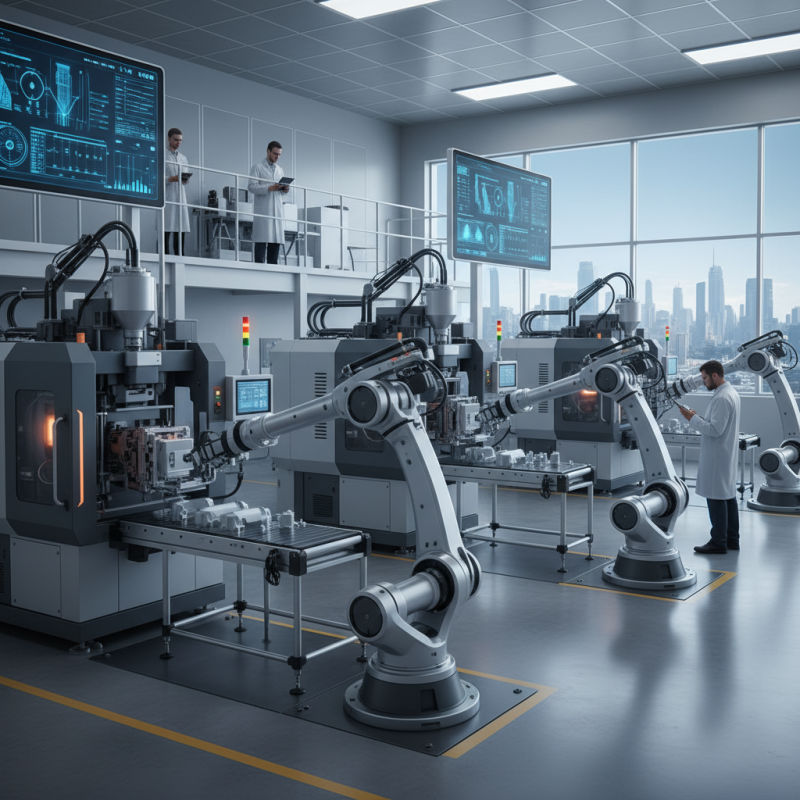
Injection machine robots play a critical role in modern manufacturing. They automate the injection molding process, improving efficiency and consistency. Understanding the basics of these robots helps you make informed decisions.
These robots are designed to handle injection molds with precision. Typically, they consist of an arm, a control system, and a gripper. The arm moves in multiple axes, allowing it to reach different positions. The control system ensures accurate movements while the gripper securely holds the mold. However, inaccuracies in settings can lead to defects in production.
Here are some tips to consider:
- Assess your production volume. This will determine the robot’s speed and capacity.
- Evaluate the complexity of your projects. A simple design might require only basic functionality.
- Keep in mind that not all robots have the same adaptability. Some may struggle with varying mold sizes.
Selecting the right injection machine robot requires careful consideration. Think about your specific goals. A robot that excels in one area might fall short in another. Reflect on your unique requirements to avoid costly mistakes.
Assessing Your Production Requirements and Goals
When choosing an injection machine robot, it's essential to reflect on your specific production requirements and goals. Assessing these needs begins with understanding your manufacturing volume. High-output productions may need a faster machine. Slower productions can prioritize flexibility and functionality over speed. Think about whether you require batch processing or continuous production lines. This will influence the type of robot you choose.
Consider the complexity of the parts being produced. Intricate designs often need precise movements and advanced technologies. However, not all production environments require this level of sophistication. Sometimes, a simpler robot is a better fit. Evaluate your budget and maintenance costs, too. These factors can feel overwhelming. It's important to weigh the long-term benefits against initial investment costs. Be prepared to revisit your choices as production needs evolve. This approach can lead to more informed decisions and lasting success.
Evaluating Different Types of Injection Machine Robots
When considering injection machine robots, it's essential to evaluate the types available. They come in various designs, each catering to specific needs. Articulated robots are popular due to their flexibility. They can reach complex angles and handle intricate tasks. However, their programming can be challenging for some operators. This complexity may lead to mistakes if the team isn't properly trained.
Cartesian robots are another choice. They offer straightforward movements along three axes. This simplicity can be beneficial for repetitive tasks. Still, they might lack the versatility needed for diverse projects. Users often face the trade-off between speed and precision. A slower, precise robot may sometimes be better than a fast, less accurate one.
Collaborative robots, or cobots, work alongside humans. They enhance productivity but can add complexity to workplace safety. Operators must understand potential hazards. A poorly integrated system can lead to accidents. Consider the workspace and the intended tasks carefully. The wrong robot can cause frustration and inefficiency, making this decision critical.
Key Features to Consider When Selecting a Robot
When selecting an injection machine robot, certain key features are vital. First, consider payload capacity. This defines how much weight the robot can handle. For instance, a study from the International Federation of Robotics indicates that machines with higher payloads are essential for heavy industrial applications. A robot with a payload of 5 kg might suffice for light tasks, but more demanding projects require units that can lift at least 15 kg or more.
Next, think about flexibility. A robot should adapt to various tasks. Some robots are designed exclusively for specific models, which limits their utility. In contrast, models that support multiple tools or attachments offer greater versatility. This adaptability could lead to a more efficient production process. It’s reported that using flexible robots can increase productivity by up to 30%.
**Tip:** Always analyze your production requirements before making a choice. It’s important to reflect on what tasks the robot will perform.
Don’t overlook the programming capabilities. Many machines offer user-friendly interfaces, making them easier to program. However, complexity can lead to higher training costs. Investing in a robot that balances ease of use with advanced features may be a wise choice. A robot that is too complex can hinder operations and slow down training.
**Tip:** Test several options in real-world scenarios if possible. This helps to gauge how well they meet your specific needs.
Key Features to Consider When Selecting an Injection Machine Robot
Budgeting and Cost Analysis for Injection Machine Robots
Budgeting for an injection machine robot is crucial. Many factors influence costs. The initial price is just one aspect. Installation, maintenance, and training also add to the total expenses. Researching different models helps in understanding these financial commitments. Without a clear budget, overspending is easy.
Consider operational costs, such as energy consumption and spare parts. Each machine has specific energy requirements. Some models are more efficient than others. This may save costs in the long run. Don’t overlook the potential hidden costs too. They can catch you off guard. Is there enough room for the machinery? Does your facility require modifications?
Finally, reflect on the benefits these robots provide. Higher efficiency and precision can lead to increased production. But, can you quantify these benefits? Some companies overlook this. It’s essential to assess return on investment. A detailed cost analysis will guide you to the right decision. Without this, you might regret your choice later.