What is Spiral Welded Round Pipe and Its Key Benefits?
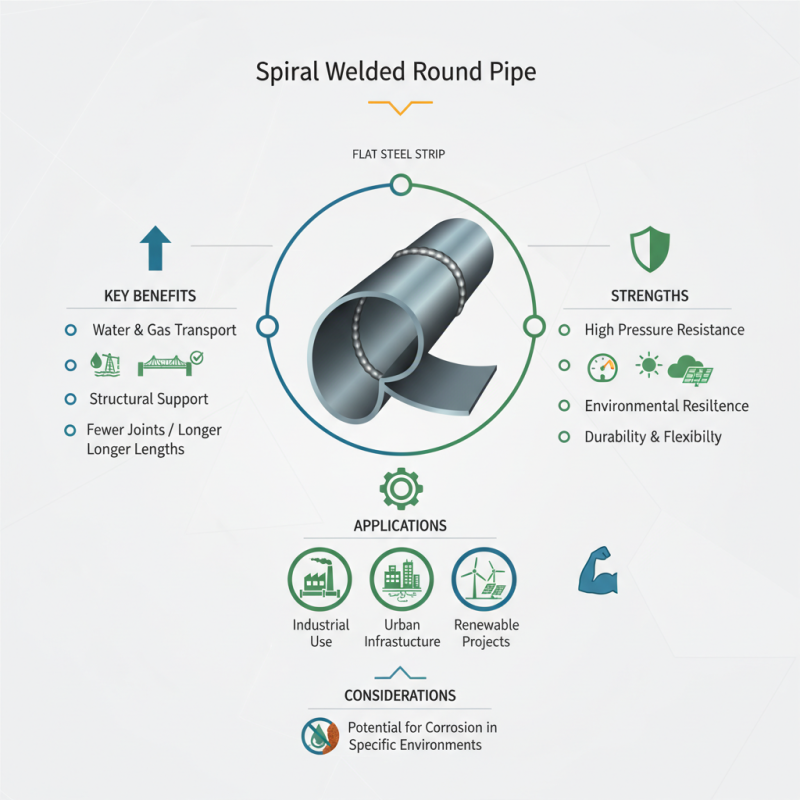
The construction industry has seen significant advancements in materials used for piping systems. One such innovation is the Spiral Welded Round Pipe. This type of piping is produced by spirally welding a flat steel strip. It offers a unique blend of strength and flexibility that traditional piping often lacks.
Spiral Welded Round Pipe is beneficial in various applications, including water transportation, oil and gas distribution, and structural supports. Its manufacturing process allows for longer lengths, minimizing the need for joints, which can be potential weak points. Moreover, the inherent strength of this type of pipe aids in withstanding high pressure and environmental conditions.
Understanding the benefits and uses of Spiral Welded Round Pipe can guide engineers in material selection. Knowledge in this area can lead to improved project outcomes and cost efficiency. However, it is crucial to recognize the limitations, such as potential corrosion issues in specific environments. Awareness of these factors is essential for making informed decisions.
What is Spiral Welded Round Pipe?
Spiral welded round pipe is a type of steel pipe formed by spirally welding thin strips of steel. This method allows for the creation of larger diameter pipes while maintaining wall thickness. These pipes are widely used in the oil and gas, water treatment, and construction industries. The unique design enhances strength and resistance to pressure.
One key advantage of spiral welded round pipes is their cost-effectiveness. According to a report by the American Institute of Steel Construction, spiral pipes can reduce material costs by up to 30% compared to traditional methods. Moreover, these pipes have a lower manufacturing waste rate, which makes them an environmentally friendly option. It's worth noting that while they are strong, their performance may vary based on welding techniques.
Tips: Always check the specifications of the pipe before purchasing. Understand your project requirements to select the right type. In some cases, using a different pipe design might yield better results. Quality assurance practices can help identify any inconsistencies in the welding process. Regardless of the application, understanding the material properties is crucial for performance.
What is Spiral Welded Round Pipe and Its Key Benefits?
| Dimension | Description | Key Benefit |
| Diameter | Available in various diameters from 4” to 120” | Versatility for different applications |
| Wall Thickness | Ranges from schedule 10 to schedule 80 | Strength and durability to withstand high pressures |
| Material | Carbon steel, stainless steel, and alloy steel | Suitable for various environmental conditions |
| Production Method | Spiral welding process | Efficient and cost-effective manufacturing |
| Application | Used in oil and gas, water supply, and construction | Designed for various industrial applications |
Key Manufacturing Process of Spiral Welded Round Pipe
Spiral welded round pipe is produced using a unique manufacturing process that offers multiple advantages. The core method involves rolling flat steel sheets into a cylindrical shape. This sheet is then welded along the spiral seam. The continuous welding allows for efficient production and minimizes waste. Furthermore, the spiral configuration provides superior strength compared to traditional straight welded pipes.
During the manufacturing process, control over dimensions and weld quality is critical. Operators must monitor parameters like temperature and pressure. Any fluctuation can impact the integrity of the weld. Regular inspections are essential to ensure the pipes meet industry standards. This attention to detail prevents long-term issues and enhances durability.
Another aspect to consider is the versatility of spiral welded pipes in various applications. They can be used in construction, oil, and gas industries. However, the choice of materials is crucial in determining performance. Selecting the wrong type may lead to premature failure. Manufacturers must be aware of the materials' properties to ensure reliability. This careful selection process underscores the importance of expertise in the field.
Advantages of Using Spiral Welded Round Pipe
Spiral welded round pipes are constructed using a spiral welding process. This technique enhances the pipe's strength and flexibility. One major benefit is their cost-effectiveness. Spiral welded pipes are generally less expensive to produce than other types. They offer great value for large-scale applications, proving to be a budget-friendly choice.
When considering these pipes, think about the materials used. High-quality steel ensures durability. Additionally, the spiral welding technique allows for thicker walls, enhancing their resistance to pressure and wear. This method leads to less waste during manufacturing, maximizing efficiency.
Tips for choosing spiral welded pipes include assessing your project requirements. Different industries may have specific standards. Choose the right dimensions and thickness for your needs. Always compare suppliers to ensure you receive reliable products. Reflect on your choices to find the best fit for safety and performance. Investing time in research now can save costs in the long run.
Typical Applications for Spiral Welded Round Pipe
Spiral welded round pipes are widely used in various industries due to their unique manufacturing process. These pipes are created by spirally welding steel strips together, which allows for cost-effective production of large diameter pipes. This strength-to-weight ratio makes them ideal for heavy applications.
In construction, spiral welded pipes play a crucial role. They are used for piling, foundations, and water drainage systems. According to industry reports, these pipes can handle significant pressure and are resistant to corrosion, making them reliable for long-term use. Their ability to withstand harsh environmental conditions is an added advantage, especially in urban infrastructure projects.
Tips: When selecting spiral welded round pipes, consider the thickness and diameter that suit your specific application. Always consult with industry experts to ensure compliance with local regulations and standards.
Another notable application is in the oil and gas sector. These pipes are essential for pipelines transporting crude oil and natural gas. Their high durability reduces maintenance costs, increasing overall efficiency. A study from a leading materials science journal indicates that properly fabricated spiral welded pipes can have a service life exceeding 50 years when installed in suitable environments.
Tips: Regular inspections are vital for maintaining the integrity of spiral welded pipes in demanding environments. Evaluate environmental factors that may affect their longevity.
Comparative Analysis with Other Types of Pipes
Spiral welded round pipes are gaining popularity in numerous industrial applications. Their manufacturing process involves winding steel strips into a tube shape, then welding the edges. This method enhances the structural integrity of the pipe. It’s important to note that spiral pipes often have a higher strength-to-weight ratio compared to traditional welded or seamless pipes.
When comparing spiral welded pipes to their counterparts, the differences become evident. Traditional welded pipes can have seam vulnerabilities. In contrast, spiral pipes distribute stress more uniformly. According to industry reports, spiral welded pipes can withstand various environmental factors better. They are less prone to corrosion due to their weld configuration. Nevertheless, one must be aware that not all applications suit spiral welded pipes perfectly.
Analyzing cost-effectiveness highlights some trade-offs. Spiral pipes might have a higher upfront cost. However, their longer lifespan and lower maintenance needs often offset this factor. The American Society for Testing and Materials emphasizes that choosing the right pipe type can impact project viability. Ultimately, examining the specific project requirements is crucial. Understanding the pros and cons of each pipe type allows for a more informed decision.