
- Home
- >
- Knowledge Center
- >
- Blogs
Blogs
Sharing knowledge is key to an innovative and healthy industry! This knowledge center is therefore a central place on our website to share information. Read all about our industry in the blogs below!
Top Flotation Equipment for Optimal Mining Performance?
In the dynamic field of mining, selecting the right Flotation Equipment is crucial for maximizing operational efficiency. According to a report by Global Market Insights, the flotation equipment market is projected to reach $3.5 billion by 2026, driven by technological advancements and increasing demand for minerals. This underscores the importance of investing in high-quality flotation systems.
Dr. Emily Carter, a renowned expert in mineral processing, states, "The efficiency of flotation equipment directly impacts the recovery rates of valuable minerals." This highlights the critical role that modern flotation technologies play in improving mining performance. However, the industry still faces challenges. Many operators struggle with optimizing equipment settings for varying ore types, leading to inconsistent performance.
Moreover, while many companies invest heavily in cutting-edge flotation technologies, not all achieve their expected results. A detailed analysis reveals that around 30% of flotation operations fail to reach optimal recovery rates. This underscores the need for continuous improvement and innovation within the flotation equipment sector. As the industry evolves, staying informed about best practices and technological advancements will be essential for success.
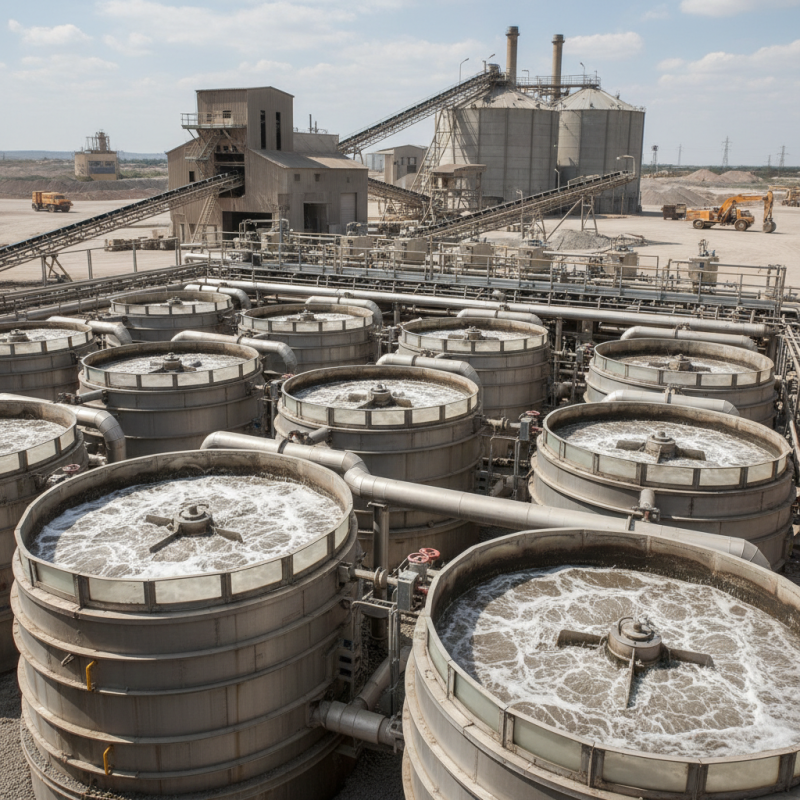
Top Flotation Equipment Types Used in Modern Mining Practices
Flotation equipment plays a crucial role in modern mining practices. It separates valuable minerals from ores through a process of froth flotation. This method significantly boosts recovery rates, impacting operational efficiency.
Types of flotation equipment vary widely. Tank flotation systems are commonly used due to their scalability. According to recent reports, these systems can improve recovery rates by up to 30%. Another type, column flotation, offers advantages in treating fine particles. It has become more prevalent, especially in copper and gold production.
Despite advancements, challenges remain. For instance, the efficiency of flotation can be affected by factors such as particle size and mineral composition. These complexities require ongoing research to refine the process. Operators must remain updated with the latest technologies and practices to enhance performance and reduce operational risks. These critical reflections can lead to improved outcomes in flotation methods.

Key Performance Indicators for Flotation Equipment Efficiency
Flotation equipment plays a crucial role in mining operations. Its efficiency directly impacts the recovery rates and overall performance of mineral processing. A key performance indicator to consider is the flotation recovery rate. This metric reflects how well valuable minerals are recovered from the ore. High recovery rates signify effective equipment, but achieving optimal levels can be challenging.
Another important metric is the air-to-solids ratio. Balancing this ratio is vital for optimal bubble formation and adherence to particles. If not well managed, it can lead to poor separation outcomes. Interestingly, different ores may require different adjustments. This complexity requires a knowledgeable team for proper calibration and testing.
Equally significant is the flotation kinetics, which measures how quickly desired minerals are collected. Faster kinetics can lead to increased throughput but may require careful monitoring to avoid losses. Sometimes, equipment might underperform despite seemingly ideal conditions. Regular assessment and adjustments are necessary for consistent results. Analyzing these indicators reveals the need for ongoing reflection and adaptation in mining practices.
Top Flotation Equipment for Optimal Mining Performance
| Equipment Type | Throughput (TPH) | Recovery Rate (%) | Energy Consumption (kWh/Ton) | Operational Cost ($/Ton) |
|---|---|---|---|---|
| Conventional Flotation Cell | 50 | 85 | 12 | 15 |
| Dissolved Air Flotation | 30 | 90 | 10 | 18 |
| Tank Flotation Cell | 70 | 83 | 11 | 14 |
| Column Flotation Cell | 40 | 88 | 9 | 16 |
| Reactor Flotation Cell | 25 | 92 | 8 | 20 |
Comparative Analysis of Flotation Cells and Their Operating Costs
In the world of mining, flotation cells play a critical role in separating valuable minerals from waste. A recent industry report highlights that the choice of flotation equipment significantly influences operating costs. The average operational cost can range from $0.50 to $1.50 per ton of ore processed. This variability depends on several factors, including the design efficiency of the flotation cells and the types of reagents used.
Efficiency is a key aspect. Well-designed flotation cells can achieve recovery rates of over 90% for certain minerals. However, many operations struggle to reach this potential. Incorrect cell configurations can lead to suboptimal performance. Additionally, maintenance can become a hidden cost, with some plants spending up to 15% of their operational budget on unscheduled repairs.
Another consideration is the energy consumption associated with flotation equipment. Data shows that energy costs can account for up to 30% of total operating expenses. Therefore, selecting energy-efficient equipment is crucial for sustainable operations. There is room for improvement in energy management across many mining operations, as underutilized equipment may lead to wastage and higher costs. As the industry evolves, addressing these inefficiencies will be essential for maintaining competitiveness.
Latest Innovations in Flotation Technology for Enhanced Recovery Rates
The advancement of flotation technology has drastically improved recovery rates in mining. Recent studies show that the latest innovations can enhance recovery by up to 15% compared to older systems. Newer flotation cells with better aeration and agitation mechanisms have been at the forefront of this improvement. They allow for more efficient separation of minerals from ores, facilitating a rise in productivity.
Interestingly, the integration of automation in flotation processes has gained traction. Data indicates that automated systems can reduce operational costs and improve consistency in recovery. For instance, real-time monitoring helps identify issues before they escalate. Continuous optimization of flotation parameters leads to better yield, which could be crucial in the competitive mining industry.
**Tips:** Regularly reviewing the performance data of your flotation cells can identify areas for improvement. Consider investing in training for operational staff to keep them informed about new technologies. Engage with industry reports to stay updated on trends and innovations. This can enhance decision-making and foster a culture of continuous improvement in flotation operations.
Top Flotation Equipment Performance
Case Studies on Successful Flotation Equipment Implementations in Mining
Flotation equipment plays a crucial role in mining performance. Various case studies show its significant impact on operational efficiency. For instance, in a copper mining operation, the implementation of advanced flotation cells led to a notable increase in recovery rates. The facility saw a 15% boost in copper concentrate yield. This improvement stemmed from optimized bubble size and density.
Another example can be found in a gold extraction site. The introduction of new flotation technology reduced chemical consumption by 20%. While these advancements are impressive, they are not without challenges. Some operations reported inconsistent particle contact, affecting the overall recovery. Continuous monitoring and adjustments are essential to overcome these hurdles.
Investing in the right flotation equipment is vital for mining success. Operators must analyze not just equipment performance but also site-specific challenges. The journey to optimal flotation isn't straightforward. Each facility has unique variables that can complicate implementation. However, learning from real-world examples can pave the way for better strategies and outcomes.